The Challenge
As part of the Emotional Design course in my Master's in Interaction Design at the Estonian Academy of Arts (EKA), I set out to redesign the emotions of Apple’s Voice Memos app—a tool known for its minimal interface and wide range of functional possibilities.
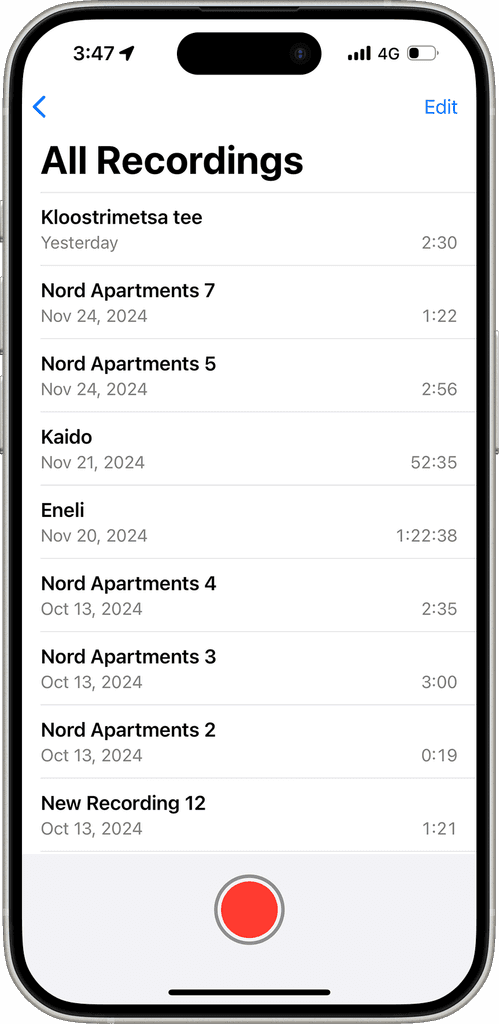
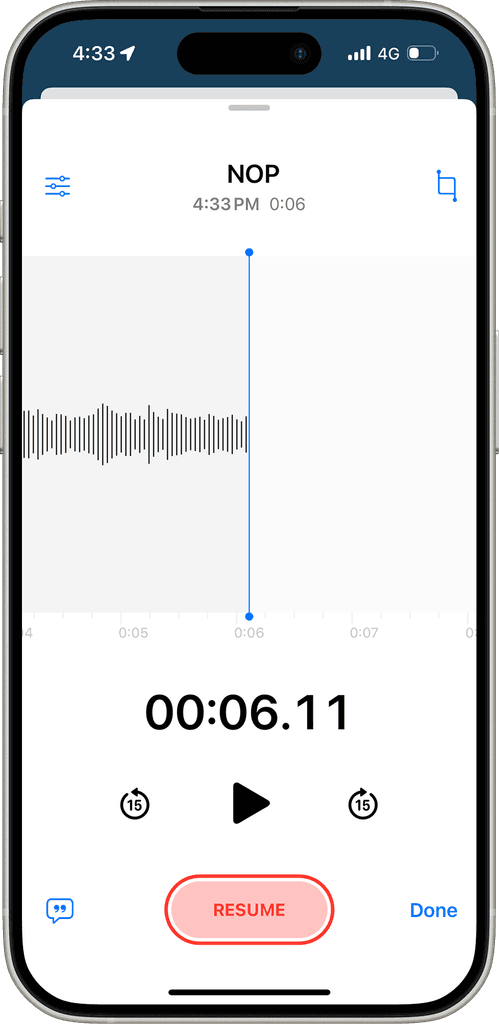
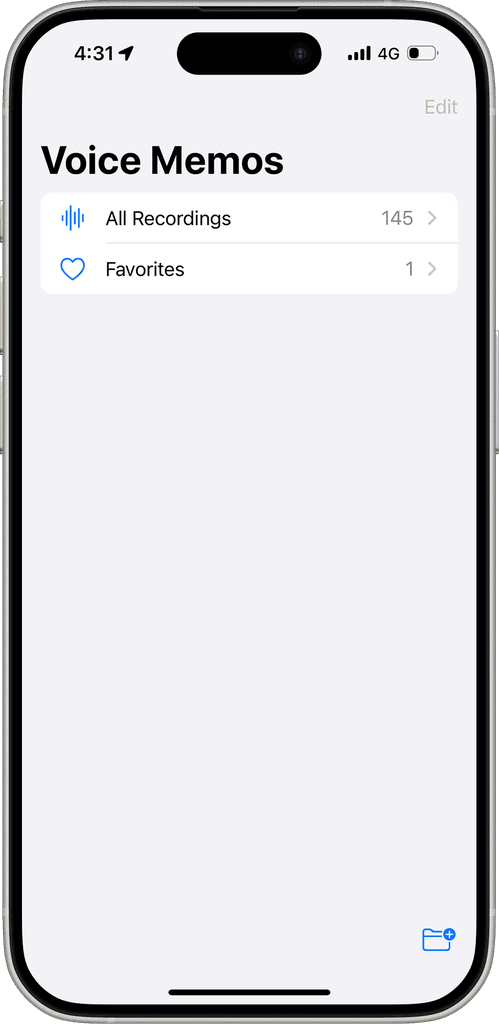
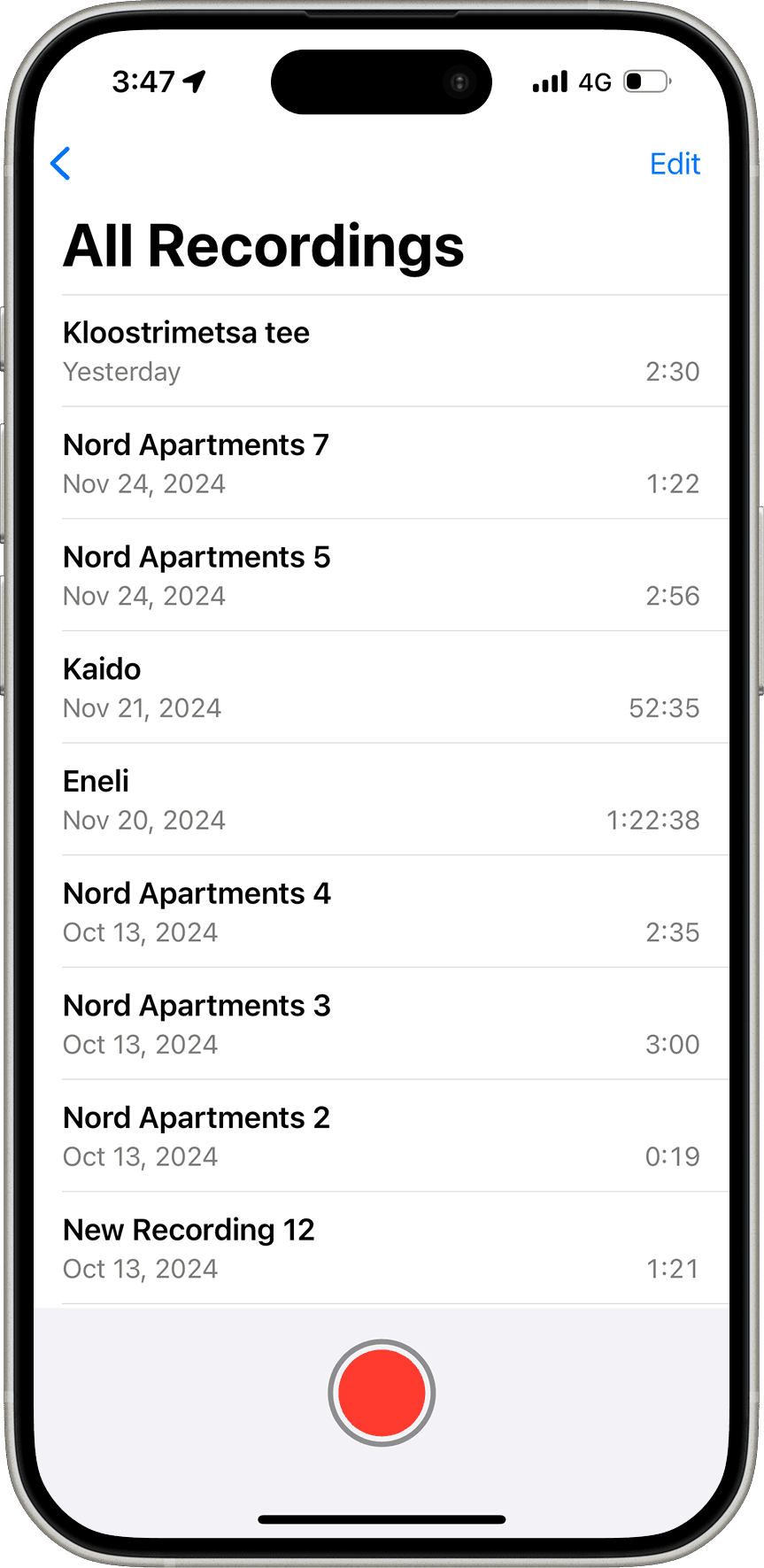
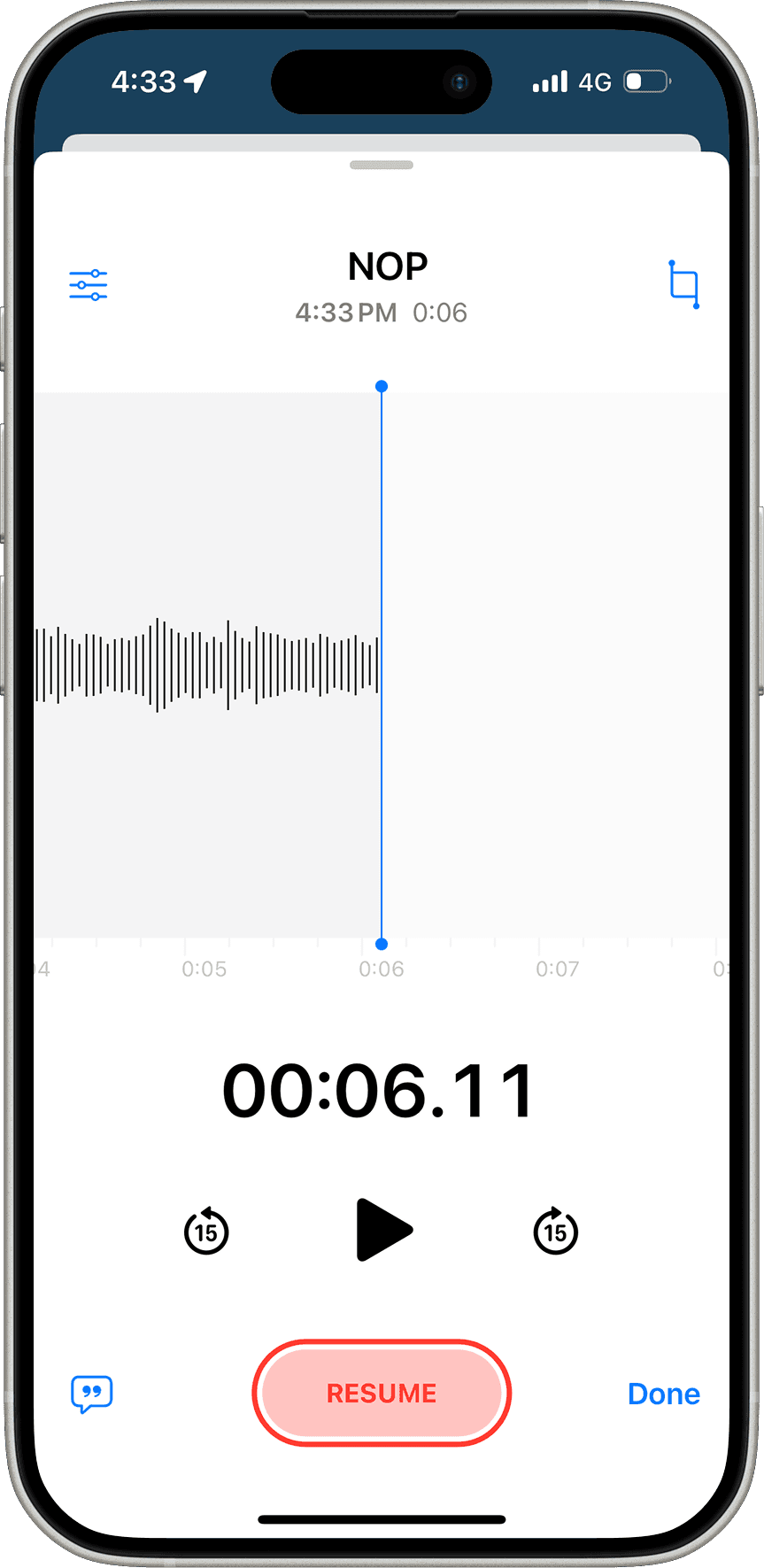
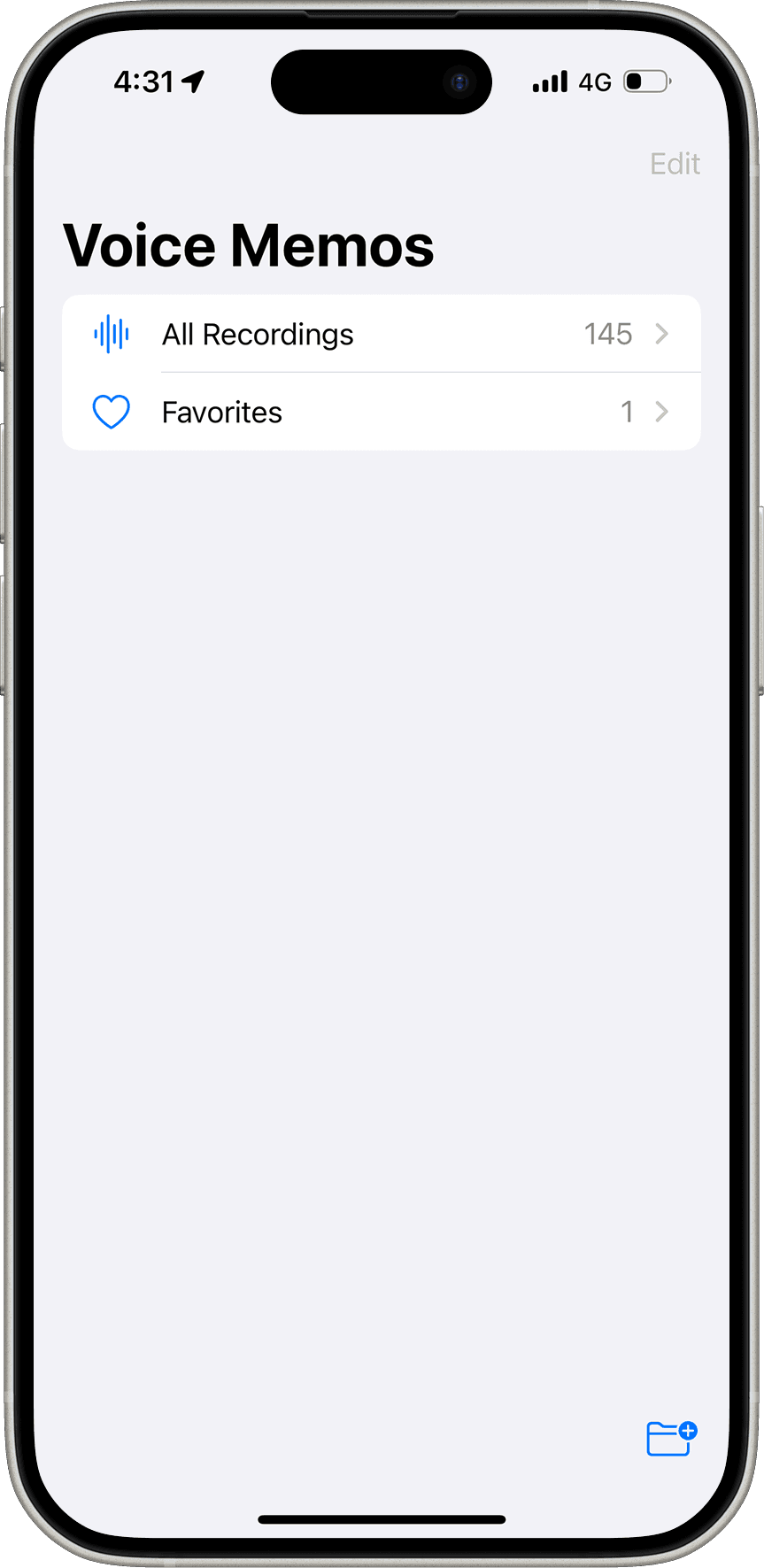
Despite its utilitarian look, Voice Memos is capable of supporting deeply personal moments—especially those of self-reflection. I wanted to reimagine the app specifically for that emotional use case: speaking thoughts aloud in order to process them or return to them later.
While the app is frequently used for interviews, lectures, music ideas, or reminders, I chose to focus on self-reflection—an often overlooked but emotionally rich use. My goal was to elevate this experience by asking:

How might we foster a sense of personal
accomplishment in adults seeking self-reflection
through voice memos?

Embodied Research
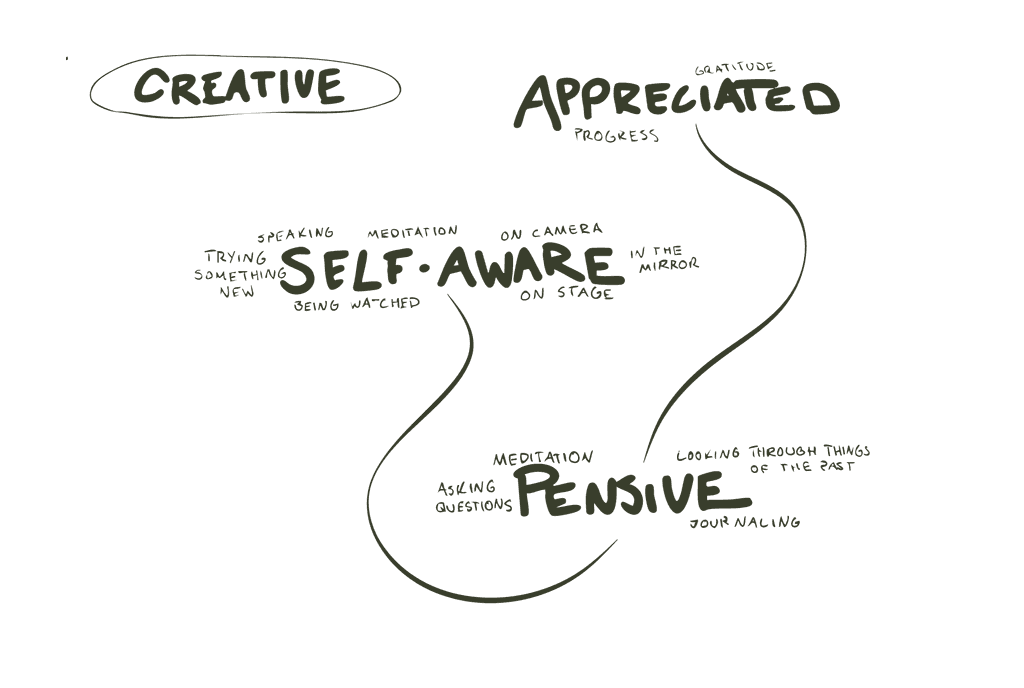
To understand better the emotions attached to this process, I underwent embodied research. I needed to perform an action that I thought was similar to the emotional journey I wanted the app to provide in this use case: something that made me self-aware, pensive, and appreciated.
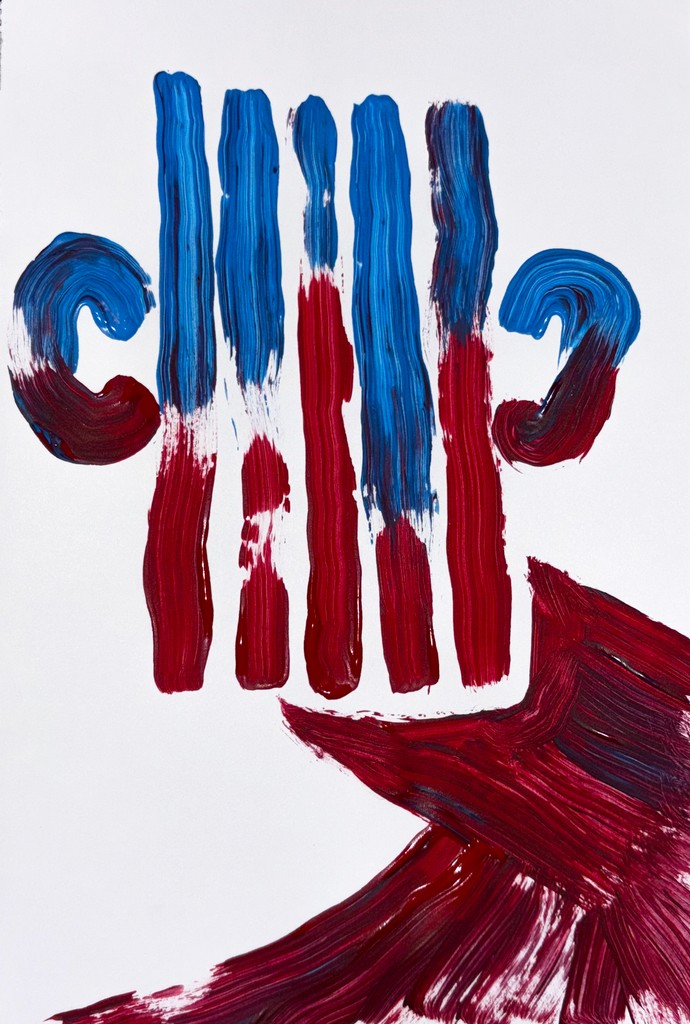
So I decided to paint with my left hand, on camera, while asking some self-reflective questions to myself. Trying something new, on camera, made it so I was extra aware of myself, the thought-provoking questions made me pensive, and forcing myself to produce these quick paintings made me appreciative of my small progress.
I realized, that this small progress, the feeling of accomplishing something, was really at its core what was keeping me going throughout this entire process.
Interaction Mapping
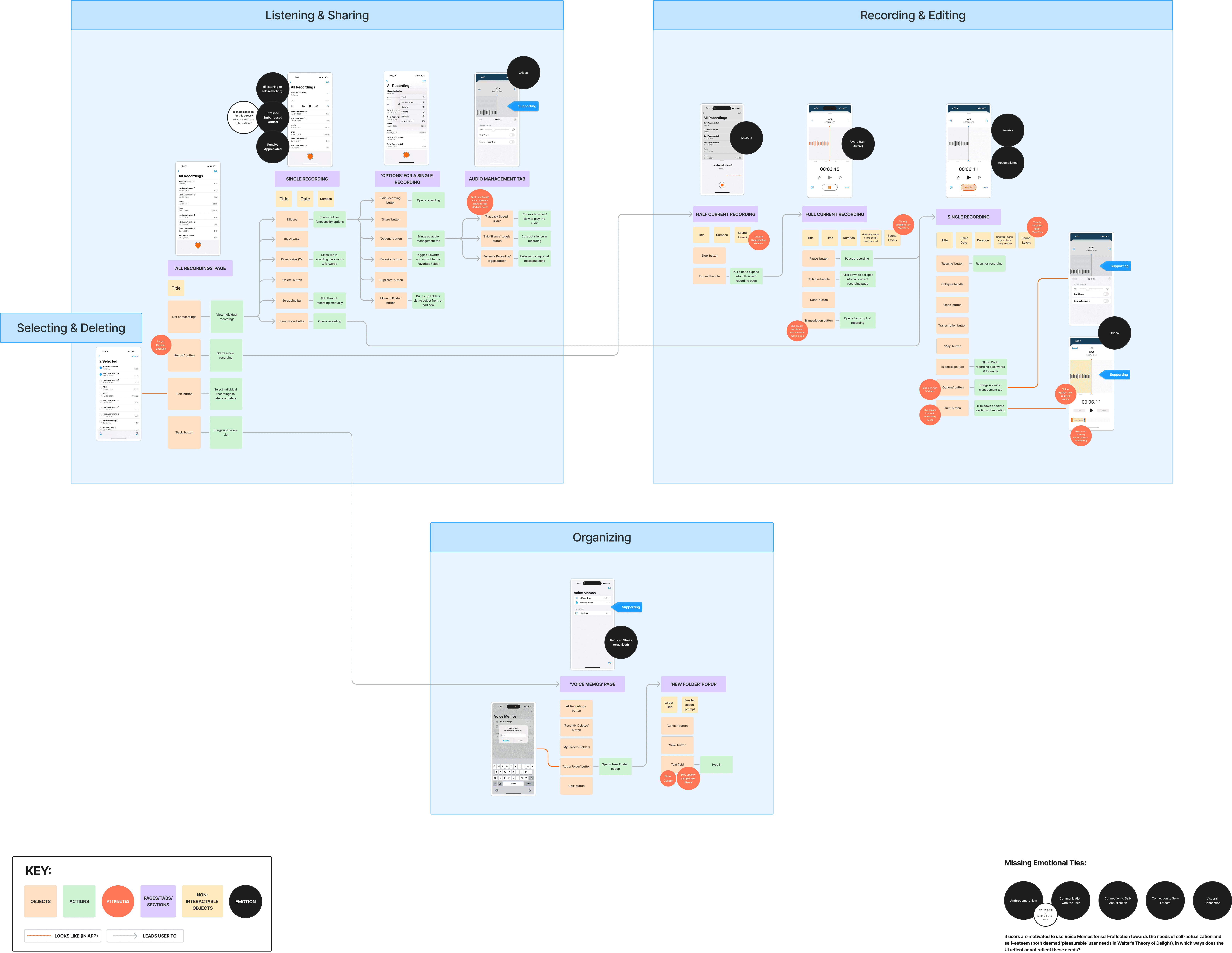
Through interaction mapping, I was able to pinpoint a specific area of intervention; I decided to focus on mostly redesigning the “organizing” features of Voice Memos. Using Don Norman’s Three Levels of Emotional Design as a framework, I redesigned the app to support and elevate emotional engagement at each level:
#1: Visceral Level — First Impressions
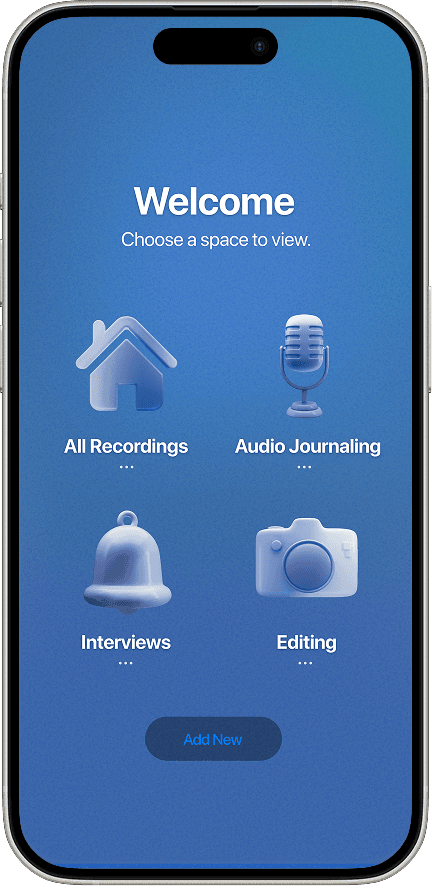
The default landing page of Voice Memos—just a plain list of recordings—felt emotionally flat, even discouraging. To set a more inviting tone:
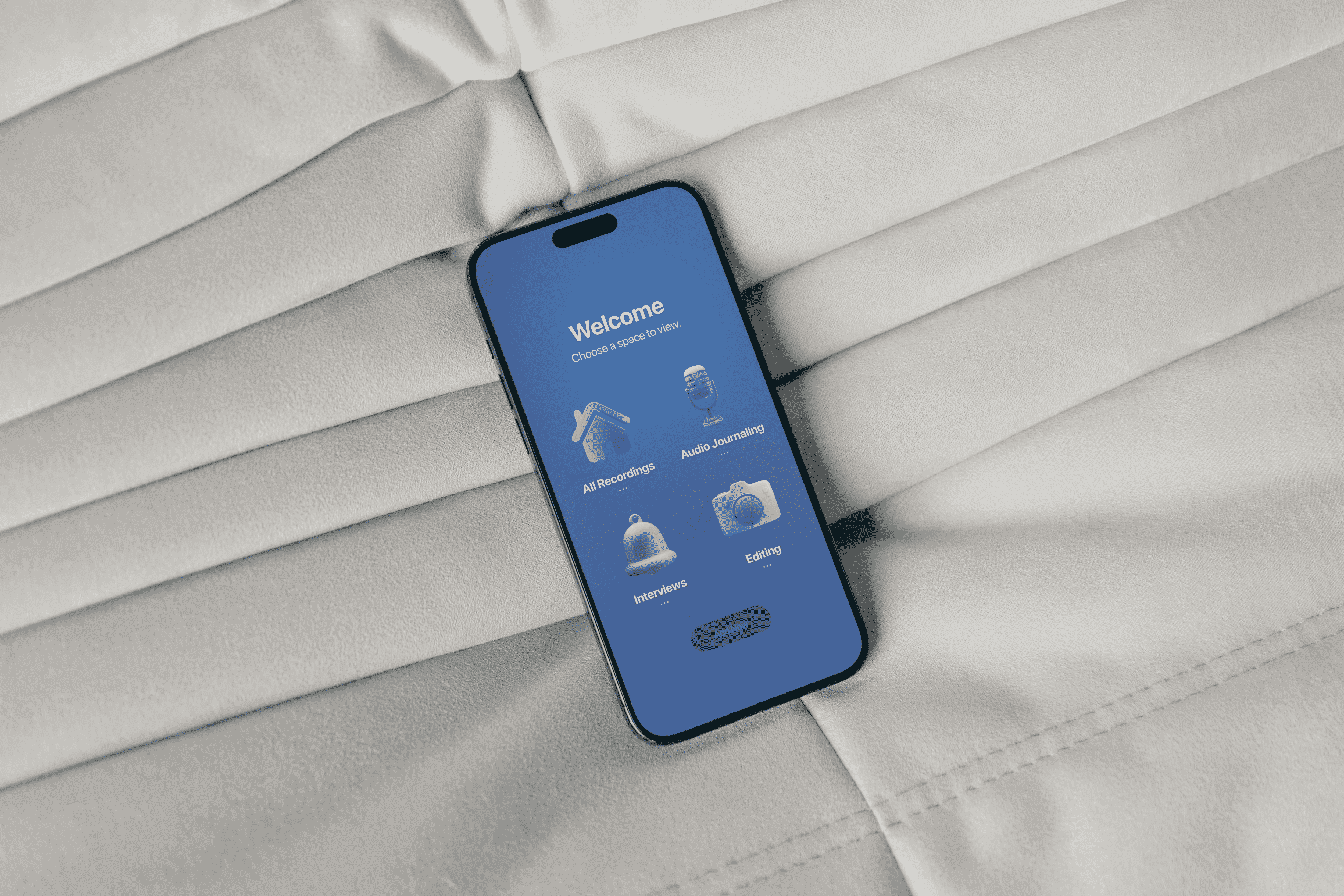
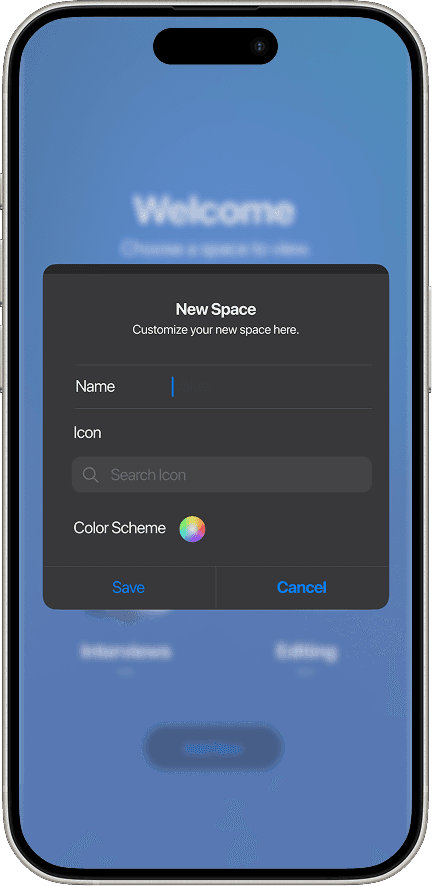
I introduced a calming color palette to create a sense of tranquility and reliability. "Folders" became Spaces, each with soft illustrations representing different use cases (e.g., Audio Journaling, Interviews, Editing, etc.). Customization options allowed users to create new spaces and personalize their emotional journey.
#2: Behavioral Level — Interactions That Feel Meaningful
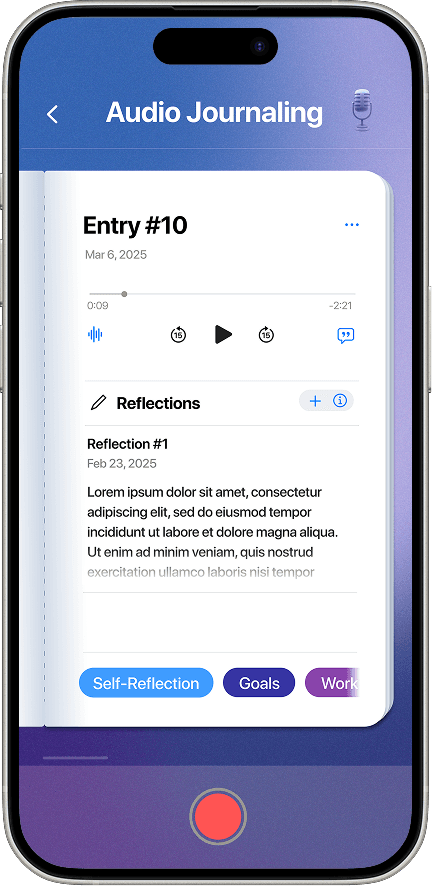
#3: Reflective Level – Looking Back with Intention
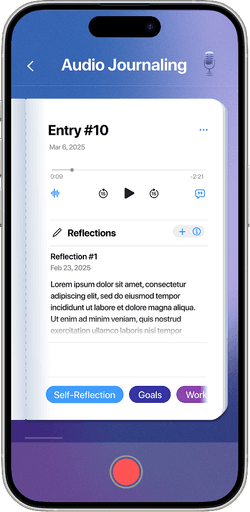
The new Reflections section encouraged users to process what they had recorded by asking open-ended questions such as:
“If I could speak to my past self in this recording, what would I say?”
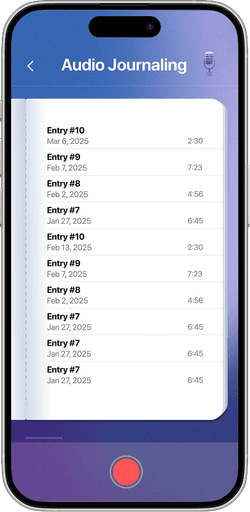
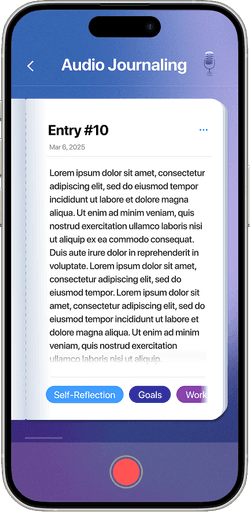
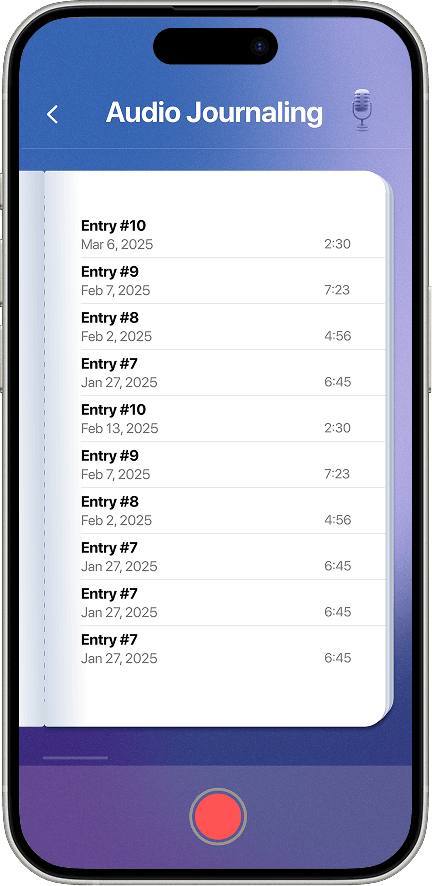
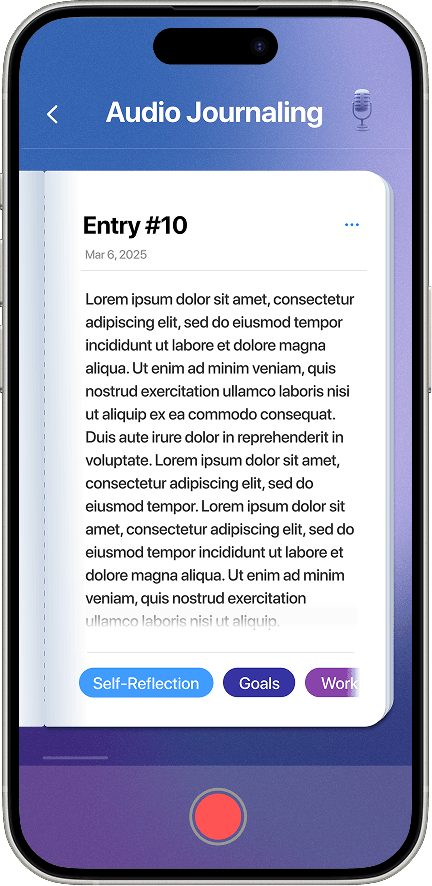
Users could respond through voice or text, both of which were saved within the same entry—mimicking the feel of writing in a diary. The layout evoked the tangible intimacy of a physical journal, making the experience feel private, sincere, and personally rewarding.
The Outcome
This emotional redesign transformed Voice Memos from a cold utility into a personal sanctuary for thought. By introducing warmth, tactile satisfaction, and emotional follow-up, users are encouraged not just to use the app—but to feel accomplished, curious, and secure while doing so.